


Faculty Affiliates
We welcome faculty interested in affiliating with the Institute to submit an affiliation request through the form below.

Beth Ferguson
Associate Professor, Department of Design | Circular Futures Lab | [email protected]
Beth Ferguson is an ecological designer and Associate Professor at UC Davis, where she directs the Circular Futures Lab. Her work merges solar engineering, active mobility, digital craft, and sustainable materials to promote climate resilience. Ferguson’s projects have been showcased internationally at Ars Electronica, Dutch Design Week, and Otago Museum, and nationally at SXSW, TEDxPresidio, and the Exploratorium. She’s held residencies at the Autodesk Technology Center, Haystack Mountain School of Crafts, and ZERO1 Arts Incubator in New Zealand. Her interdisciplinary approach bridges design, technology, and sustainability to inspire innovative solutions for a low-carbon future.

Catherine Brinkley
Associate Professor, Human Ecology | Human Ecology | LinkedIn | [email protected]
Dr. Catherine Brinkley is an Associate Professor in Human Ecology, Community and Regional Development in the College of Agricultural and Environmental Sciences. With a PhD in city and regional planning, a veterinary medical degree, and a masters in virology, her research focuses on health and design. She is a former Fulbright Scholar, Watson Fellow, and National Science Foundation Career Award Winner. She has published on topics such as healthy food systems, local government planning and decision-making, and sustainable development. Her work is used internationally by the United National Food Agriculture Organization as well as local communities to guide plans and policies. Dr. Brinkley leads the Equity, Land, and Food Systems (ELFS) lab group that currently works on informing citizen engagement in local climate and equity planning. Please visit the lab webpage for more information about research and publications.

Christina Cogdell
Professor, Department of Design | Mycelium Project | [email protected]
Professor of Design who specializes in the history, criticism and practices of biodesign. My research is published as Eugenic Design: Streamlining America in the 1930s (2004) and Toward a Living Architecture? Complexism and Biology in Generative Design (2019). I am currently developing mycelium-based bricks for architecture in collaboration with UCD engineers and the BioInnovation Lab, as well as with a colleague at Yunnan Arts University in Kunming, China.

Claire Goldstein
Professor, Department of French & Italian, Director of the Humanities Program | [email protected]
Claire Goldstein studies early modern French-language literature and culture, with publications including In the Sun King’s Cosmos: Comets and the Cultural Imagination of Seventeenth-Century France (2025) and Vaux and Versailles: The Appropriations, Erasures and Accidents that Made Modern France (2008). Her scholarship is motivated by her abiding interests in visual and material culture her curiosity about how the things people see, and the objects and material practices that they engage with, create cultural meanings. Professor Goldstein’s current research seeks to understand how the circulation and recycling of fashion accessories in 17th century France traces connections between continents and classes and engages multifarious discourses about what it means to be human.

Jae Yong Suk
Director, California Lighting Technology Center / Associate Professor, Department of Design | California Lighting Technology Center | Instagram | Linkedin | [email protected]
Jae Yong Suk is the director of the California Lighting Technology Center (CLTC) and associate professor in the Department of Design at UC Davis. Suk has a unique background as a highly accomplished researcher, professor, and internationally recognized lighting designer. Suk’s scholarship contributes to the literature of lighting, daylighting, building energy efficiency, grid resiliency, and human comfort in built environments. Suk leads efforts to expand and diversify CLTC’s research portfolio—expanding into building electrification and decarbonization, smart home technology, and human comfort and wellbeing—positioning CLTC at the forefront of emerging national and global priorities.

Jiahui Wei
Lecturer | Lab | [email protected]
Dr. Jiahui Wei is a lecturer & postdoc researcher at UC Davis, specializing in cellulose and biomass-derived materials. She earned her Ph.D. in Chemistry, focusing on sustainable materials and renewable chemicals. Her research bridges chemistry, materials science, and sustainability, including cellulose nanocrystals and biobased dyes. In addition to her scientific work, Dr. Wei has a background in textile and clothing design, with a special interest in traditional Chinese fabrics and Hanfu, combining her expertise in materials with cultural heritage and design.

Kayleigh Perkov
Assistant Professor, Department of Science and Technology Studies | Website | [email protected]
Kayleigh Perkov is an Assistant Professor in the Department of Science and Technology Studies at the University of California, Davis. She examines the intersection of handmaking and technology in the 20th and 21st centuries. Her current book project traces how craft practice has been embraced by people to reassert personal skill when facing mass-produced, black-boxed technological systems. In addition, Kayleigh has an active curatorial practice and writes about contemporary art and design. Her work has been supported by the Getty/ACLS, the Smithsonian American Art Museum, the Center for Craft, and the Newkirk Center for Science and Society.
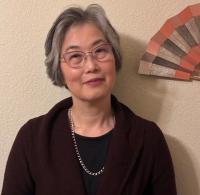
Michiko Suzuki
Professor, Departments of East Asian Languages and Cultures and Comparative Literature | LinkedIn | Website | [email protected]
Michiko Suzuki is professor of Japanese and Comparative Literature at University of California, Davis. Her areas of expertise include modern and contemporary Japanese literature, women’s writing, Japanese film, feminism, gender and sexuality, and early twentieth-century global sexology. In addition to these fields, she also specializes in kimonos and related Japanese wear. Her recent monograph, _Reading the Kimono in Twentieth-Century Japanese Literature and Film_ (University of Hawai‘i Press), examines what these clothes communicate within specific literary, historical, and cultural contexts. In her “free time” she repurposes old kimonos, remaking them into Western-style clothing so that they can take on new lives.

Ron Runnebaum
Associate Professor, Department of Viticulture & Enology; Department of Chemical Engineering | LinkedIn | [email protected]

Thomas Maiorana
Associate Professor, Department of Design | [email protected]
Tom Maiorana is an Associate Professor in the Department of Design at UC Davis. He specializes in product design and development, design thinking, and prototyping. Tom's research explores the ways in which low-resolution prototypes can be used to influence complex systems. His work helps community partners engage with highly dynamic, complicated issues, most recently through a series of customized boardgames that help communities "rehearse" wildfire evacuations. This project was initially sponsored by the CITRIS and the National Science Foundation and it has been distributed in English and Spanish across Oregon and California. Tom has an MFA in design from Stanford University and a BA in American Culture from Vassar College.

Valeria La Saponara
Professor, Mechanical and Aerospace Engineering | Website | [email protected]
Valeria La Saponara was born in Italy, where she earned her B.Sc. summa cum laude in Aerospace Engineering. She worked for two years at the Microgravity Advanced Research and Support Center, a subcontractor of NASA, the European Space Agency and the Italian Space Agency. She came to US for graduate school, earning her Ph.D. in Aerospace Engineering, and eventually joining the UC Davis community. Her research was focused on conventional fiber-reinforced composite materials, until a personal project on safer children bike helmets made her pivot to composites made with fungal mycelium -a lot more interesting, sustainable, innovative, and fun.

Haven Kiers
Associate Professor, Landscape Architecture + Sustainable Design | Website | Instagram | [email protected]
Haven Kiers is an associate professor of landscape architecture at UC Davis. She received her bachelor’s degree from Brown University and her Master of Landscape Architecture from UC Berkeley. Her projects integrate contemporary design theory with ecology and practical site-specific application and maintenance. Through studies that investigate the intersection of reconciliation ecology, aesthetics, community engagement, and mental health, her research examines the environmental benefits, technological progress, and cultural acceptance of sustainable design.

Lining Yao
Assistant Professor, Department of Mechanical Engineering | Website | Instagram | LinkedIn | [email protected]
Lining Yao is an Assistant Professor of Mechanical Engineering at UC Berkeley and director of the Morphing Matter Lab. Her research focuses on active, morphing materials to advance sustainable design for planetary and human well-being, spanning novel mechanisms, computational fabrication, and adaptive systems.
A recipient of an NSF CAREER Award and DOD MURI funding, Dr. Yao has published in Nature and Science Advances. She earned her Ph.D. from the MIT Media Lab and previously served on the faculty at Carnegie Mellon. She is an eco-design instructor for the UN and co-founder of the MorphingMatter4Girls Initiative.

Kylie Peppler
Professor, Department of Informatics | Website | [email protected]
An artist by training, Dr. Peppler is a Professor of Informatics and Professor of Education at University of California, Irvine, where she engages in research that focuses on the design of new textile technologies to support STEM learning.

Jonathan Realmuto
Assistant Professor, Department of Mechanical Engineering | Website | [email protected]
Jonathan is an Assistant Professor of Mechanical Engineering at UC Riverside, where he leads the Bionic Systems Lab. His research spans soft wearable robotics and neurorehabilitation engineering, with a focus on assistive devices for children with motor impairments.

Malindu Ehelagasthenna Galdeniye Pahalagedara
Post-doctoral Researcher | LinkedIn | [email protected]
Ph.D. E-textiles and Wearable Technology, Nottingham Trent University, UK
B.Sc.(Hons) in Mechanical Engineering, University of Moratuwa, Sri Lanka
My research sits at the intersection of electronics, mechanical and textile engineering, and usercentered design, with a strong focus on developing sustainable and inclusive technologies that enhance quality of life. I particularly explore about creating wearable and assistive systems that empower underrepresented communities and individuals living with disabilities or critical health conditions. My recent research expands on integrated haptics in textiles, human computer interactions and therapeutic applications.

Akshita Sivakumar
Assistant Professor, Department of Design | Website | Instagram | [email protected]
A designer, architect, and technoscience studies scholar, I am an Assistant Professor of Design at the University of California, Davis. My work lies at the confluence of governance, social movements, technology, and the built environment. My current research and in-progress book monograph examine how technologies of participation and computing mediate environmental governance and solidarities within California's environmental justice movement. I direct the Collective for Socio-spatial and Environmental Praxis (CoSEP), where we conduct research across two tracks: The technoscience of environmental governance, and a socio-material palette for a just transition through earth-fiber assemblies spanning hard and soft architectures.

Whenzhong Yan
Assistant Professor, Department of Mechanical and Aerospace Engineering | Website | LinkedIn | [email protected]
Wenzhong focuses on the design and deployment of next-generation soft robots and bio-inspired robots that integrate Mechanical Intelligence (MI) with Computational Intelligence (e.g., AI) to tackle critical societal challenges. Potential applications include environmental monitoring, search & rescue, space exploration, human-machine interaction, medical devices, and healthcare.
He has published in leading journals including Science, Nature Communications, Science Advances, and Advanced Materials, and has served as an Associate Editor for Soft Robotics.